Long Range America - Announcement (1 Viewer)

I also want to retain my spare tire location, not ready to sacrifice that. 16 gals transfer with a switch ( and a mod of exhaust pipe) is a good compromise for me.
Is it a good idea, or bad, to run a survey of forum members..and present to LRA?
 
I'm probably in the minority on this but I'm going for the 24 gal version if I decide to get it. My tire will not fit in the spare location and frankly I think I will just opt for no spare at this time.

I'm going with Glue Tread to repair any sidewall damage and use Safety Seal to seal any punctures. In the past, it was far easier to repair than to change out the tire in the field.
 
I'm probably in the minority on this but I'm going for the 24 gal version if I decide to get it. My tire will not fit in the spare location and frankly I think I will just opt for no spare at this time.

I'm going with Glue Tread to repair any sidewall damage and use Safety Seal to seal any punctures. In the past, it was far easier to repair than to change out the tire in the field.
I agree on the tire changing - it’s almost pure hell unless you are on a nice flat surface.
 
I'm probably in the minority on this but I'm going for the 24 gal version if I decide to get it. My tire will not fit in the spare location and frankly I think I will just opt for no spare at this time.

I'm going with Glue Tread to repair any sidewall damage and use Safety Seal to seal any punctures. In the past, it was far easier to repair than to change out the tire in the field.
hey nonamex, I've used the Safety Seal before and it works good and got me home before. But I've not used the Glue Tread, and curious if it works as good as advertised. thanks
 
hey nonamex, I've used the Safety Seal before and it works good and got me home before. But I've not used the Glue Tread, and curious if it works as good as advertised. thanks
Glue Tread works amazingly well. Sliced a tire on purpose this past Sunday. Took 45 minutes to patch and dry the glue. Aired the tire back up and still holding today.

Of course, it cannot patch big gashes or dents in the wheels. For these instances a spare is needed.
 
A spare tire is a "damned if you do, damned if you don't" situation. Over 30+ years of off-roading, I've never needed a spare but I have always had one with me. I used to carry 2 spares with my first Land Rover (1 on the roof). But I guarantee you that the day I head out without a spare, I'll get a flat in the middle of nowhere. I've only ever had 2 flat tires, both on the same stretch of highway less than 5 miles from my house. One on a truck and one on a sports car. Changed them both easily. I have helped change tires off-road and it is indeed a miserable chore.

On another note, that Gluetread stuff really looks good, if their demonstrations are true (which I think they are). I really want to pick up a kit but damn man....the price....they sure are proud of their stuff.

You pretty much need at least the "Complete Tire Repair Kit" as opposed to just a sidewall patch kit.

From their website:

Complete Tire Repair Kit

The Complete Tire Repair Kit includes everything needed for comprehensive tire repairs:
  • Patches:
    • [2] 4” x 4.5” patches
    • [2] 3” x 1.5” patches
    • [2] 1” x 1.5” patches
  • Adhesive Supplies:
    • [3] Tubes of GlueTread Adhesive
    • [6] Applicator tips
  • Repair Tools:
    • [1] GlueTread Colby valve
    • [12] Tire plugs
    • [1] Tire plug insertion T-handle
  • Additional Tools:
    • [20] Pieces of Sandpaper
$125.00

That glue sure better be some magic stuff because a few small pieces of rubber, scraps of sandpaper, and a couple simple t-handle tools ain't no $125.

 
A spare tire is a "damned if you do, damned if you don't" situation. Over 30+ years of off-roading, I've never needed a spare but I have always had one with me. I used to carry 2 spares with my first Land Rover (1 on the roof). But I guarantee you that the day I head out without a spare, I'll get a flat in the middle of nowhere. I've only ever had 2 flat tires, both on the same stretch of highway less than 5 miles from my house. One on a truck and one on a sports car. Changed them both easily. I have helped change tires off-road and it is indeed a miserable chore.

On another note, that Gluetread stuff really looks good, if their demonstrations are true (which I think they are). I really want to pick up a kit but damn man....the price....they sure are proud of their stuff.

You pretty much need at least the "Complete Tire Repair Kit" as opposed to just a sidewall patch kit.

From their website:

Complete Tire Repair Kit

The Complete Tire Repair Kit includes everything needed for comprehensive tire repairs:
  • Patches:
    • [2] 4” x 4.5” patches
    • [2] 3” x 1.5” patches
    • [2] 1” x 1.5” patches
  • Adhesive Supplies:
    • [3] Tubes of GlueTread Adhesive
    • [6] Applicator tips
  • Repair Tools:
    • [1] GlueTread Colby valve
    • [12] Tire plugs
    • [1] Tire plug insertion T-handle
  • Additional Tools:
    • [20] Pieces of Sandpaper
$125.00

That glue sure better be some magic stuff because a few small pieces of rubber, scraps of sandpaper, and a couple simple t-handle tools ain't no $125.

I opted for the Safety Seal kit and Glue Tread Sidewall kit which should cover all the bases.

On another note of interest, the fuel aux tank will have a dual filler point which means short nozzles like the ones at Costco might present problems when refilling. It is hard enough using the OEM point for short nozzles much less with two smaller filler points.

I think this dual filler is a deal breaker for me so back to Rotopax and Wavian cans. This dual filler is for the Ineos Grenadier but should be
similar to the one for LC250/GX550.

1758554441793.png
 
I would be interested in the saddle model provided it is compatible with the TRD exhaust as well. Although I don't see why it wouldn't be since the TRD is physically smaller than the stock exhaust.

One note about passing smog in CA: My understanding is that unless your technician physically checks under your vehicle, there would be no way to tell that there is an auxiliary gas tank there. My smog guy cannot be bothered to look around my engine bay and certainly does not check under the vehicle. When the time comes, Im not even sure I will physically remove my JB4. Will probably just disconnect it.
 
I couldn't see LRA posting on this forum yet, if they did, my apologies and please delete the thread.


Hey guys,
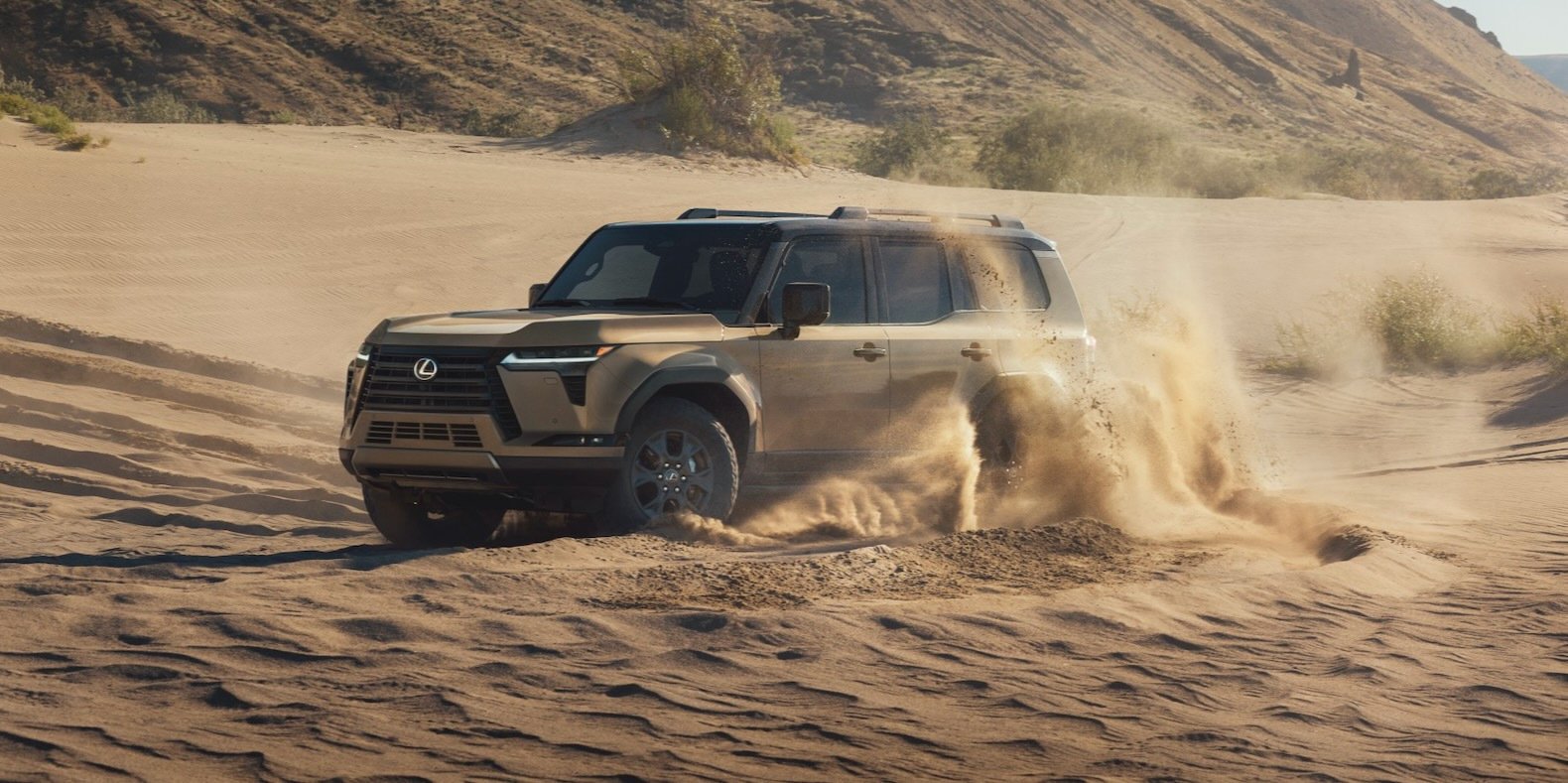
We are excited to announce that the GX 550 aux tank is in development. We need feedback with regards to which tank will come first. A saddle aux tank or a rear aux tank.
The saddle tank will require an exhaust modification which will be Included and will allow for you to retain your spare tire. This tank will be +-16gal
The begins axle tank will require the spare tire to be removed or relocated to a bumper but won’t require an exhaust modification. This tank will be +-24 gallons.
Please use the link below and let us know.
Thanks,
Aidan
Long Range America

My vote is for the +-24 gallon as others are or have developed rear wheel carriers
 
I couldn't see LRA posting on this forum yet, if they did, my apologies and please delete the thread.


Hey guys,
We are excited to announce that the GX 550 aux tank is in development. We need feedback with regards to which tank will come first. A saddle aux tank or a rear aux tank.
The saddle tank will require an exhaust modification which will be Included and will allow for you to retain your spare tire. This tank will be +-16gal
The begins axle tank will require the spare tire to be removed or relocated to a bumper but won’t require an exhaust modification. This tank will be +-24 gallons.
Please use the link below and let us know.
Thanks,
Aidan
Long Range America

May I ad also that exhaust modifications can increase back pressure and reduce performance of power and fuel efficiency
 
So would Long Range America tanks meet that CARB criteria or not is the question.
From what I saw of the Jeep LRA tank, it met the critieria, but no attempt by LRA was made to get a CARB E.O. (approval). Given that the LRA approach on the Jeep (at least) was to tie into the existing fill neck (read that as a Y connector) and run evap line to tie to the existing evap canister, I think it could be approved if someone wanted to approach a CARB referee for a one-time approval. But, in reality, no one would ever see the tank, not even during a "smog check", since the filler door and cap area was unchanged.
 
From what I saw of the Jeep LRA tank, it met the critieria, but no attempt by LRA was made to get a CARB E.O. (approval). Given that the LRA approach on the Jeep (at least) was to tie into the existing fill neck (read that as a Y connector) and run evap line to tie to the existing evap canister, I think it could be approved if someone wanted to approach a CARB referee for a one-time approval. But, in reality, no one would ever see the tank, not even during a "smog check", since the filler door and cap area was unchanged.
To be honest - no one will approach CARB or if they do, no one will get approval. My thought is drive to AZ, NV or OR and have it installed. CARB is almost as completely nuts as the CA Coastal Commission; if it were up to them we would be driving the same cars as Fred Flintstone.
 
To be honest - no one will approach CARB or if they do, no one will get approval. My thought is drive to AZ, NV or OR and have it installed. CARB is almost as completely nuts as the CA Coastal Commission; if it were up to them we would be driving the same cars as Fred Flintstone.
Like I said, I see little reason to worry about CARB for this particular installation. It's really hidden unless you crawl under the vehicle and look for it specifically. My friend essentially copied the LRA Jeep tank and you cannot see anything unless you are under it. The filler port and door are unchanged. A smog check station would not see it unless it throws an evap code and he has to track it down.
 
Like I said, I see little reason to worry about CARB for this particular installation. It's really hidden unless you crawl under the vehicle and look for it specifically. My friend essentially copied the LRA Jeep tank and you cannot see anything unless you are under it. The filler port and door are unchanged. A smog check station would not see it unless it throws an evap code and he has to track it down.
Good news it that since the GX model is new - does not heed a smog for 8 years - so no inspection.
 
I had an LRA on my Land Cruiser. It’s was a great addition. However, I did not opt for the high flow pump. My Land Cruiser drank the fuel as fast the standard pump could transfer the fuel. By now they have probably decided only to install the high flow pump, but it is something to keep in mind if in fact it is an option. The tanks are costly, and the install is as well. I had mine done in the Dallas area By Goode Automotive (2020 Land Cruiser) installed in 2022 and it was about $1500 for install. The tank (kit) was around $2500. P.S. I did the 12 gallon and it was absolutely ample for my uses. With the factory tank and the LRA I could go around 450 miles. My truck was very heavy with front and rear bumpers, sliders, full underbody steel skids, fridge, TrekBoxx drawer system, roof rack, etc, etc.
 
Last edited:
Are you saying that when you were near empty, you'd start pumping fuel from the aux tank to the main tank but the pump couldn't keep up with your Cruiser's burn rate? Couldn't you just hit the pump and start transferring when you're down around a quarter tank to avoid this issue?
 

Users who are viewing this thread

GX550 Poll

  • RRW RG3-H Hybrid

    Votes: 4 80.0%
  • Fifteen52 Analog HD

    Votes: 1 20.0%
  • Nomad 504 Field?

    Votes: 0 0.0%
Back
Top