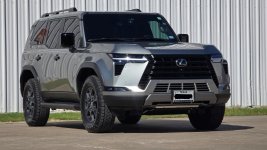
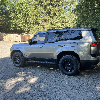
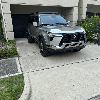
This kind of lift pushes up the front end by adding tension to the spring, thereby extending the shock. This means that for every inch of lift, you are taking away one inch of downtravel. Let's say you get 2.5 inches of lift. Well, then you've extended the shock 2.5 inches and removed 2.5 inches from how far the wheel will be able to go down when encountering a low spot in the terrain. That's going to leave you with only 1.5 to 2" of down travel in this truck. If that's what you want, then this would be a good option. But when you only have that much down travel, your wheels will not roll across dip, holes, and depressions in the terrain the way the engineers intended. You will have severe compromises in performance in many ways. Any notion that this kind of lift does not alter factory performance is laughable. Also, it's important to end the myth that lifts like this make more room for bigger tires. They do not do that. At rest on pavement, there will be more clearance above the tire. But when the shock is fully compressed, you will have the same clearance between the top of the tire and the top inside of the fender as you had before. The additional room mainly applies if you are only riding on pavement and not actually utilizing your suspension. The only other way it would apply would be if you have coil bind or some limitation and can't compress the suspension all the way. That's not something I have any data on here, though, so hopefully this product isn't limiting uptravel too.
Of course the ride will be firmer, because the spring is tighter. Again, great for pavement and maybe for looks. But if you are going offroad, your vehicle's function will be reduced from that of a high-end offroad premium truck to something like a basic AWD sedan, in terms of suspension function. You will have more clearance, but only for some components, not for the low hanging diffs and axles, so even the additional clearance benefit would be questionable in light of the reduced suspension performance.